Last-Minute Hospital Bag Checklist: What to Grab When Labor Starts
A Hospital bag last minute checklist should be short enough to use while contractions are happening: phone, wallet, glasses or contacts, charger, documents, daily toiletries, going-home clothes, baby outfit, car seat, and any medications your clinician told you to bring. This is not the time to repack the whole house. It is the time to grab the few things that could not live in the bag for weeks.
Use the parent Hospital Bag Checklist for the full pack, then keep this Hospital bag last minute checklist taped to the door, on the fridge, or on top of your bag. If labor may be starting, call your provider or hospital according to their instructions before you make the drive.
Disclosure: BabyEthos is reader-supported. As an Amazon Associate, we earn from qualifying purchases. This does not change what you pay, and product choices should never replace your hospital’s instructions, product size charts, or your clinician’s guidance.
QUICK SHOP
Last-Minute Hospital Bag Picks
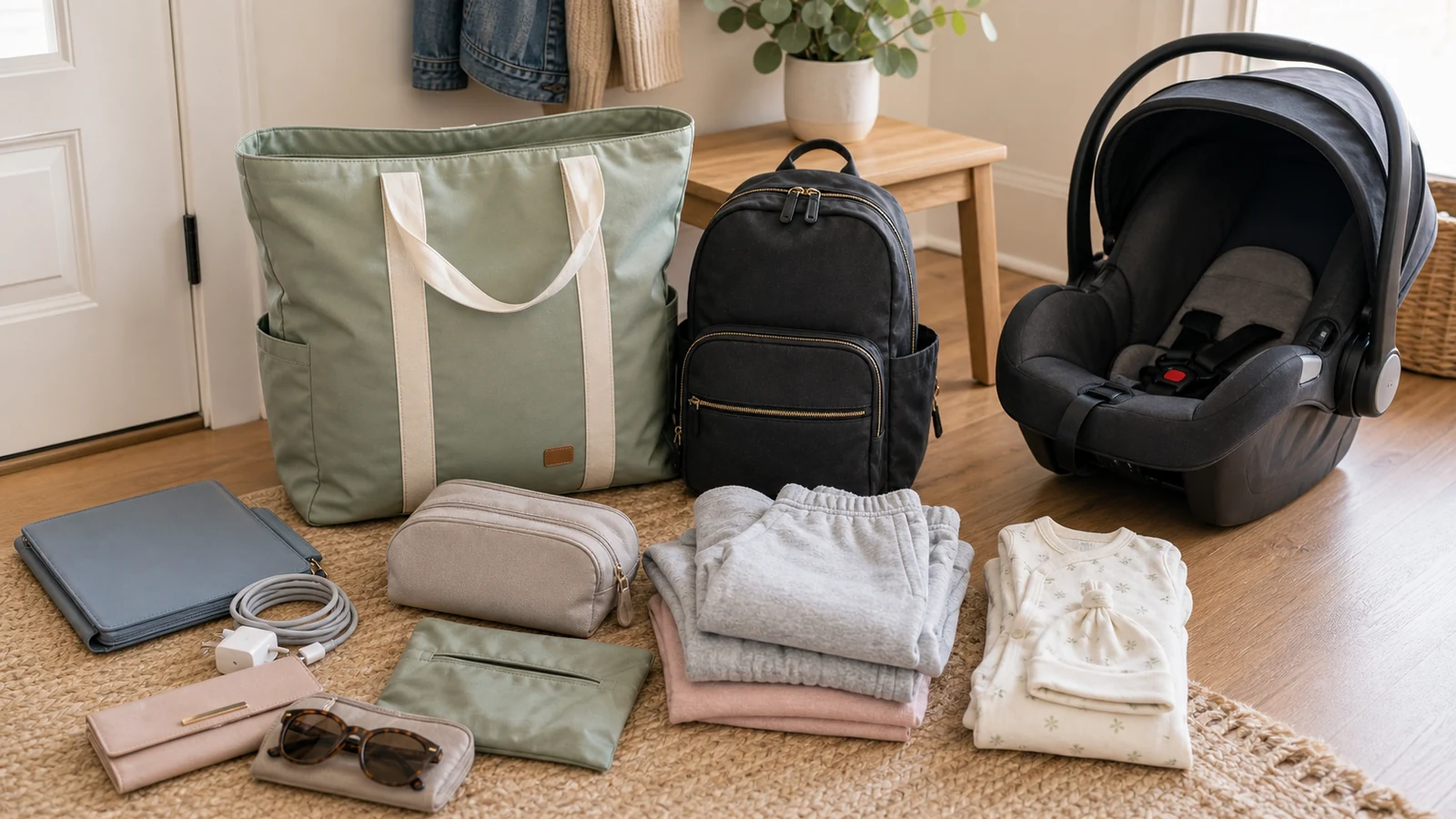
These assigned picks help with the final grab: tote, diaper backpack, wet-dry storage, toiletries, going-home outfits, car seat, long charger, and documents.
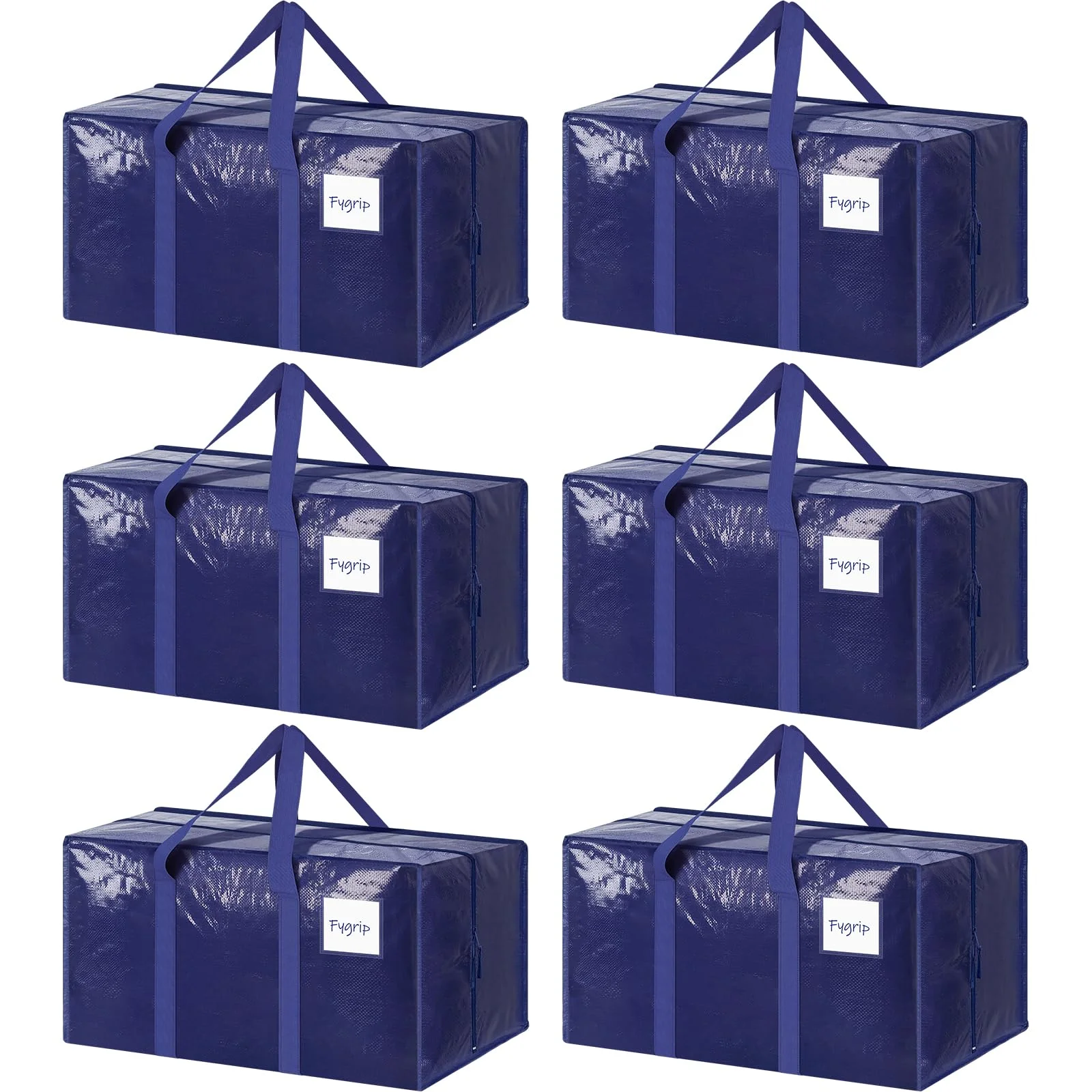
These large tote bags offer flexible storage when parents prefer separate bags for clothing, recovery supplies, and partner items.
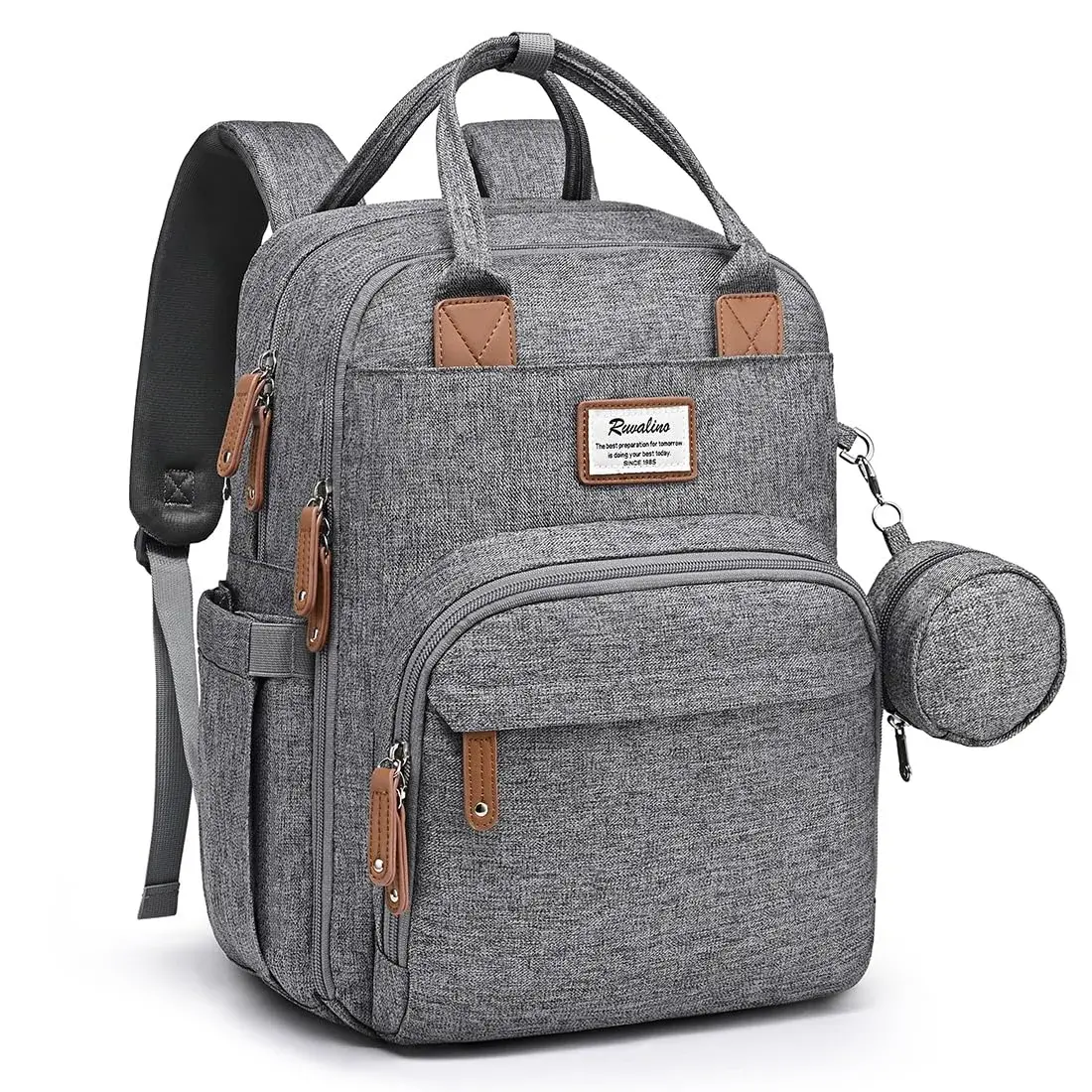
A hands-free diaper bag backpack with organized pockets for baby basics, chargers, paperwork, and the trip home.
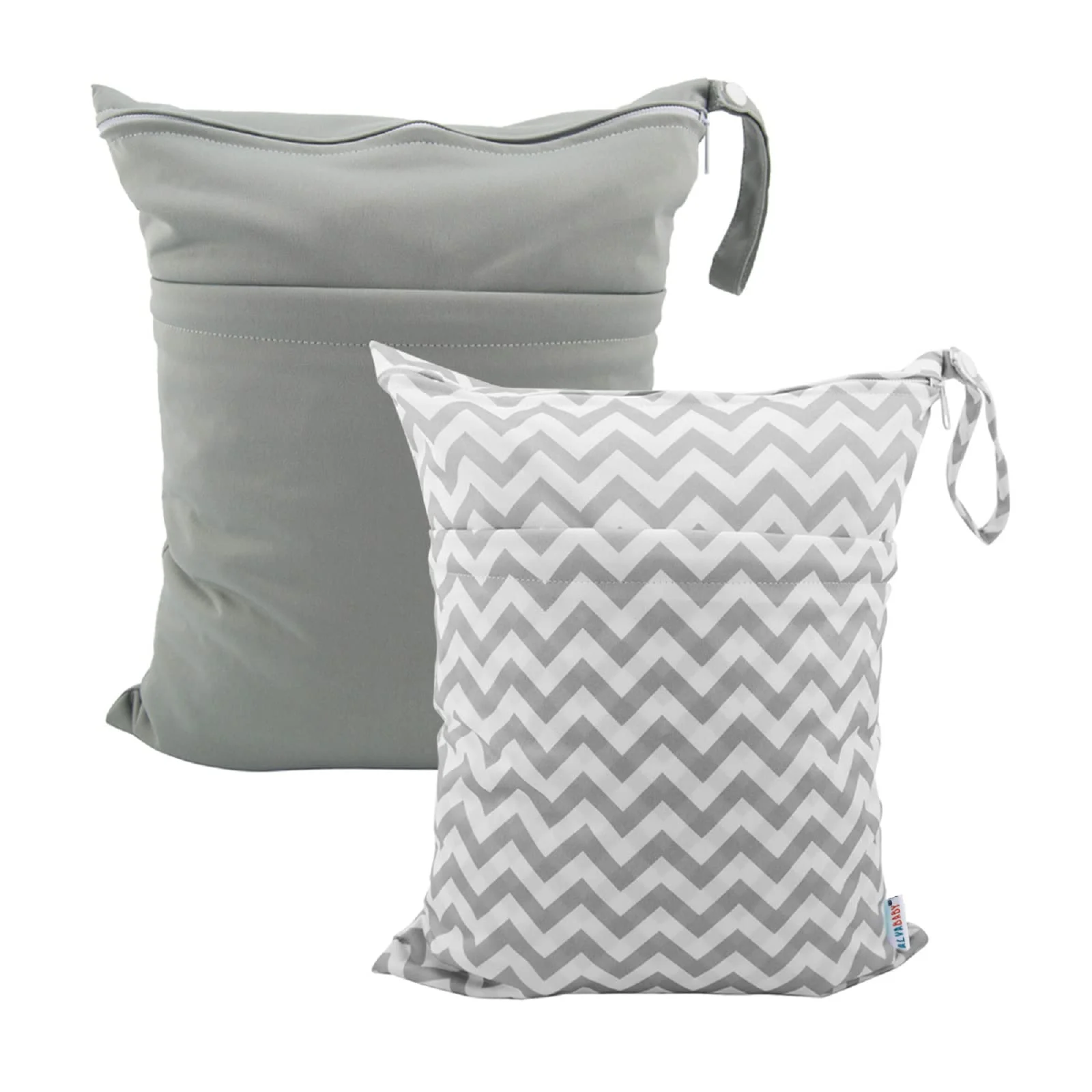
A wet dry bag gives damp clothing, used washcloths, or leak-prone toiletries a separate place for the ride home.
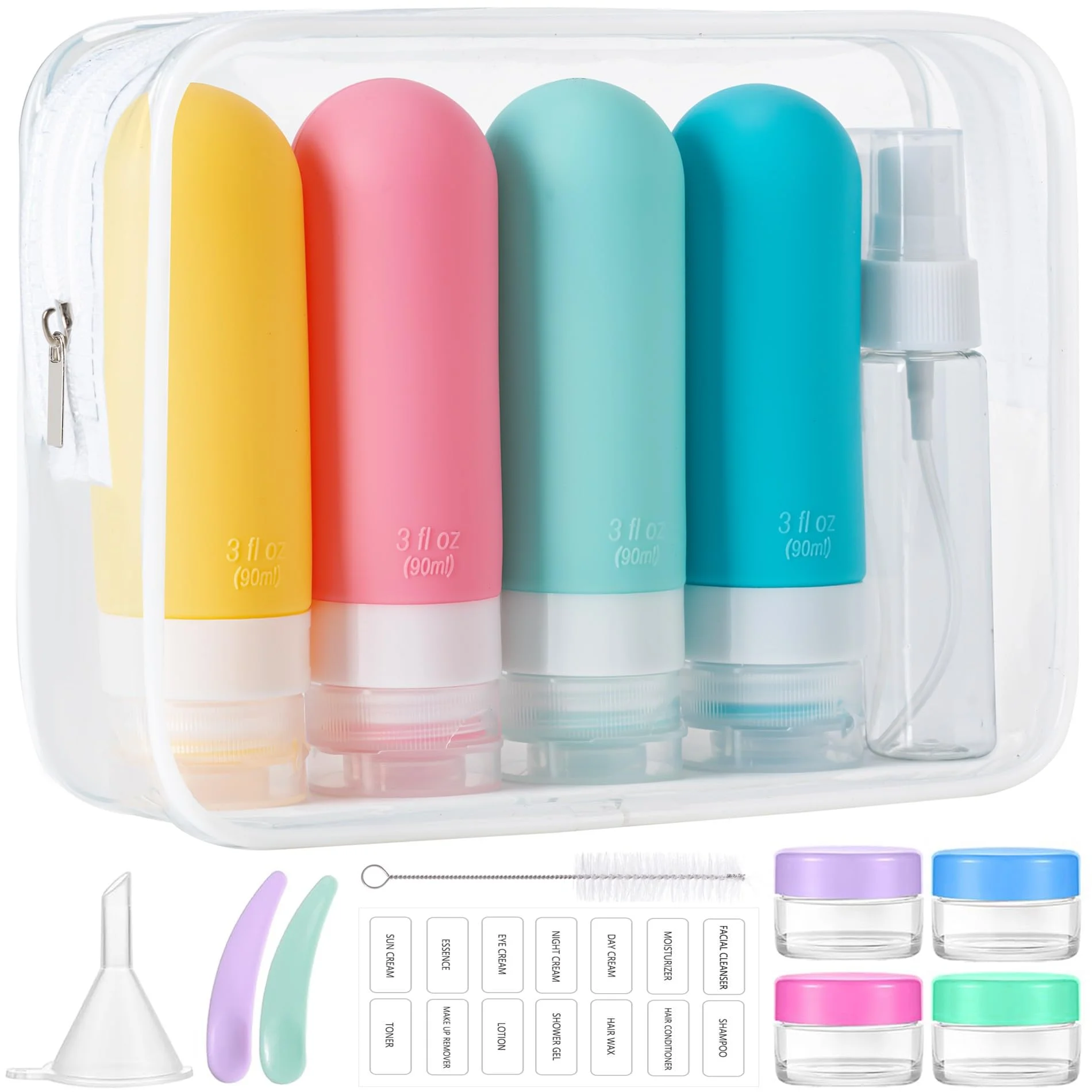
This travel toiletry kit holds shampoo, conditioner, lotion, and other familiar bathroom basics without packing full-size bottles.

A loose going-home outfit avoids pressure around a tender postpartum belly while remaining simple to step into before discharge.
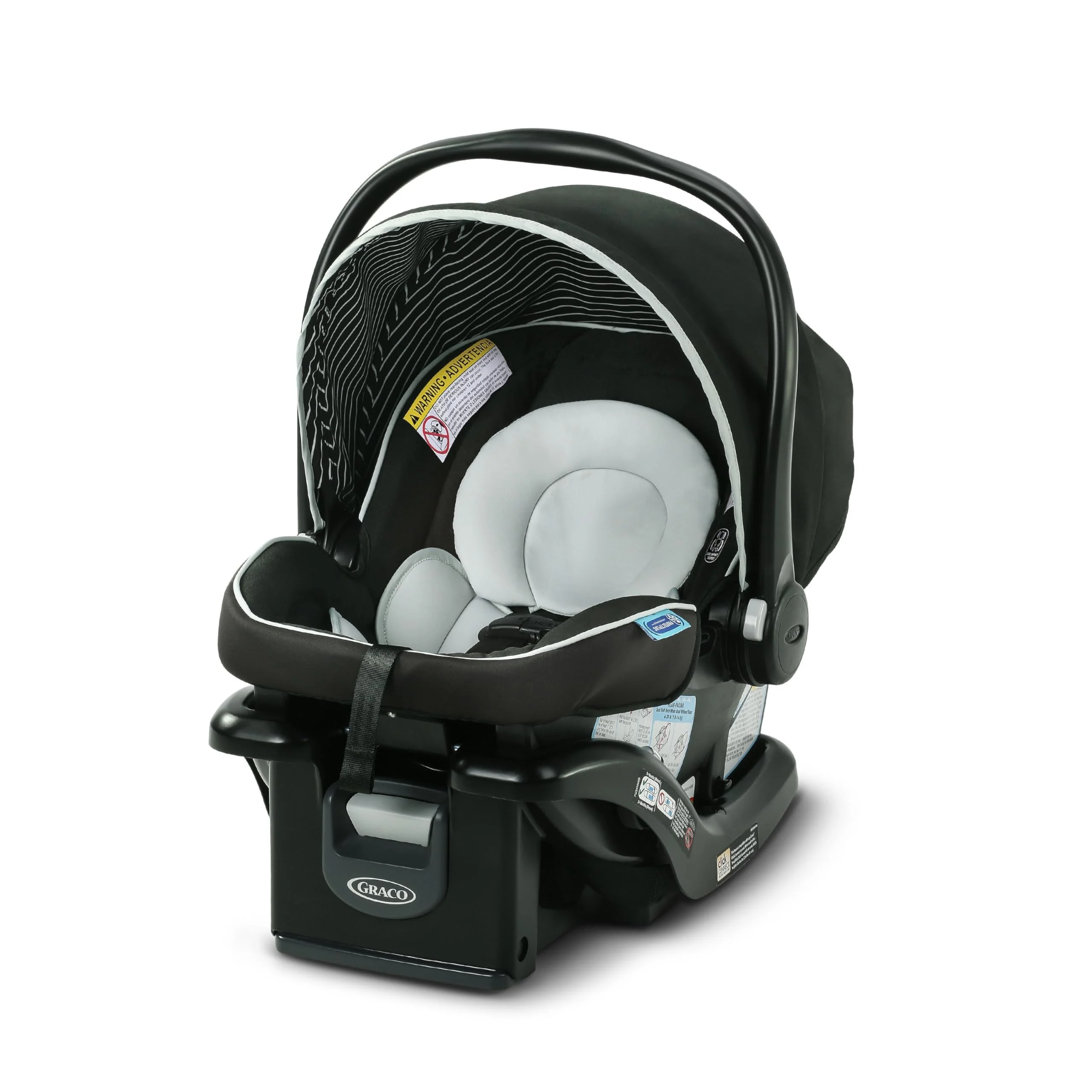
An installed rear-facing infant car seat is required for the trip home; confirm the fit and installation before labor begins.
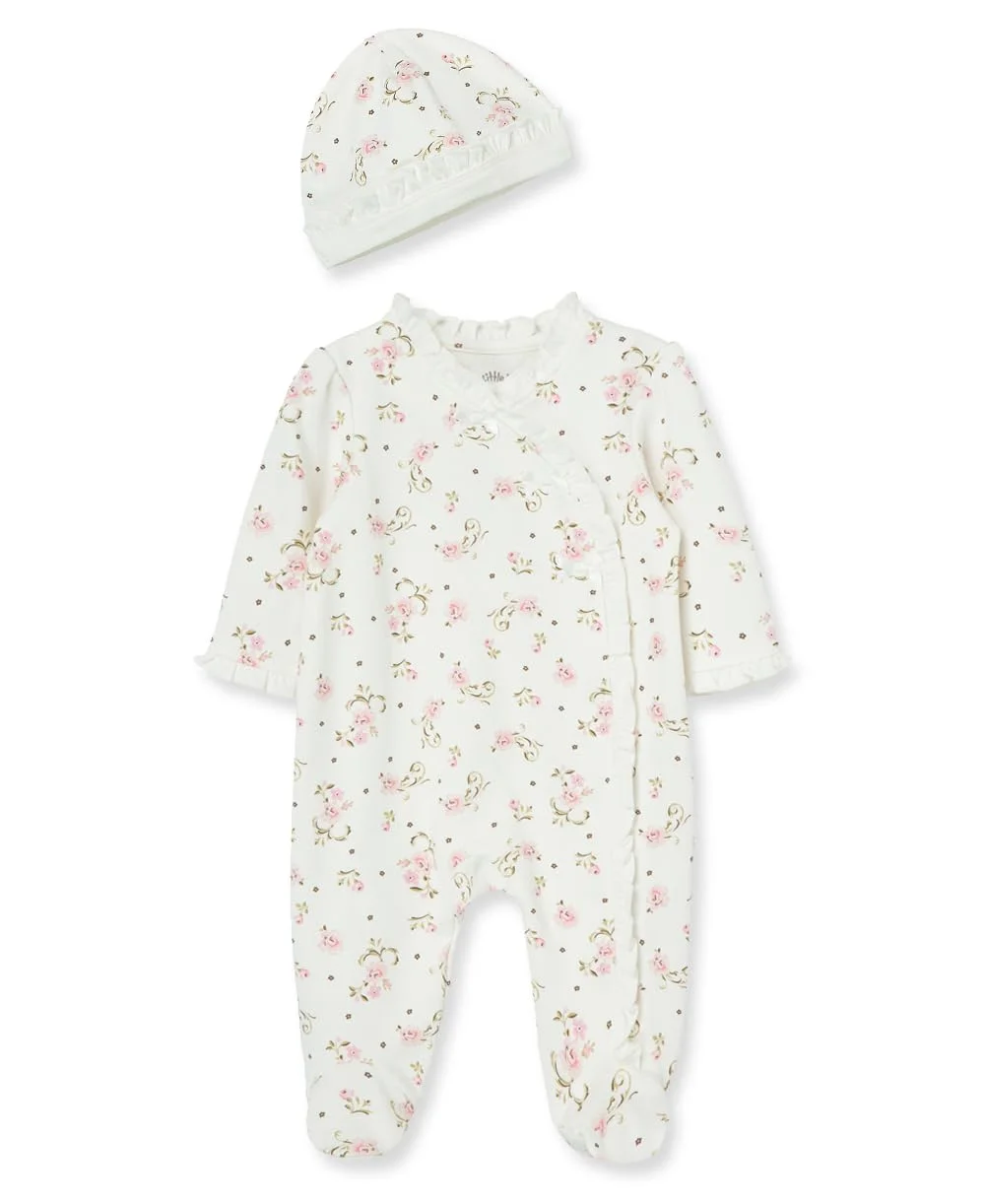
A soft newborn going-home outfit with a footed one-piece and hat keeps discharge dressing simple while fitting beneath the car-seat harness.
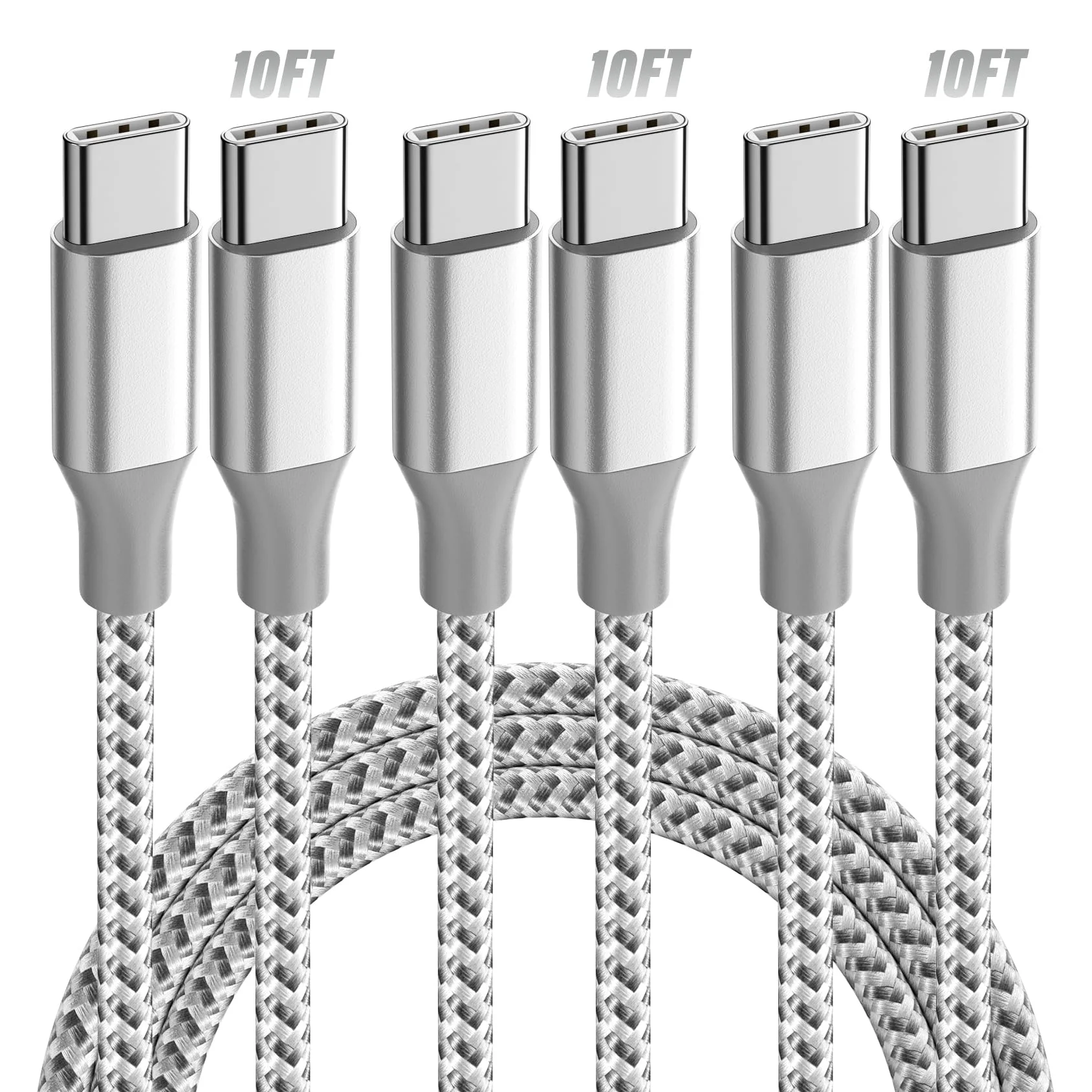
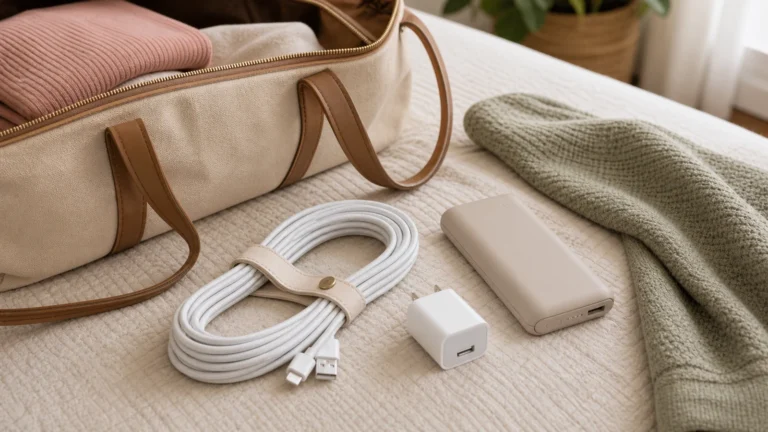
A 10-foot phone charger cable reaches outlets behind hospital beds and keeps phones available for calls, photos, and family updates.
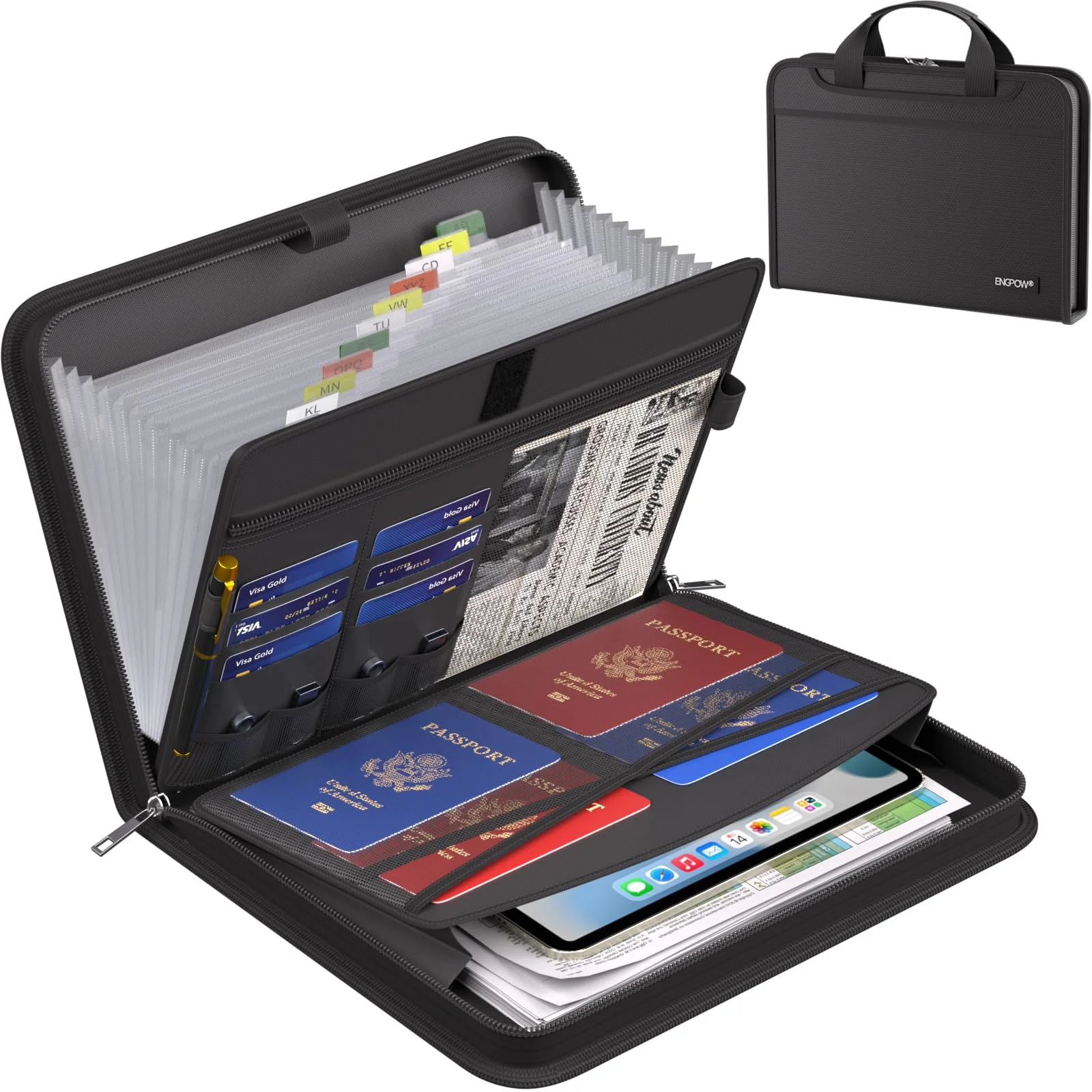
A document organizer folder keeps identification, insurance details, birth preferences, and discharge paperwork together and easy for a partner to find.
Quick Answer: What Should You Grab Last?
A Hospital bag last minute checklist should include your phone, long charger, wallet, photo ID, insurance card, glasses, contacts, daily toiletries, hair ties, lip balm, any provider-approved medications, the document folder, mom’s going-home outfit, baby’s going-home outfit, the diaper bag, and the infant car seat already installed or ready to go. Use the full hospital bag checklist to pack earlier items before this moment.
If your bag is already packed but hard to navigate, the hospital bag organization tips page can help you label the last-minute pouch so your support person knows exactly where to look.
Use a Door Bag for the Final Grab
A large tote bag is useful for the things you cannot pack early: phone, wallet, glasses, last shower toiletry items, snacks for your support person, and the folder you may have been using at home. Keep it by the main bag, not in a closet.
These large tote bags offer flexible storage when parents prefer separate bags for clothing, recovery supplies, and partner items.
A document organizer folder should be the easiest thing to pull out at check-in. Put your photo ID, insurance card, hospital forms, birth preferences, pediatrician information, and any provider-requested notes inside. A Hospital bag last minute checklist is not complete if the paperwork is somewhere under pajamas.
A document organizer folder keeps identification, insurance details, birth preferences, and discharge paperwork together and easy for a partner to find.
The long phone charger belongs in the final grab zone because many parents use their phone until the last minute. If you own a backup charger, pack that early and leave the daily charger on this list.
A 10-foot phone charger cable reaches outlets behind hospital beds and keeps phones available for calls, photos, and family updates.
Grab the Things You Still Use Every Day
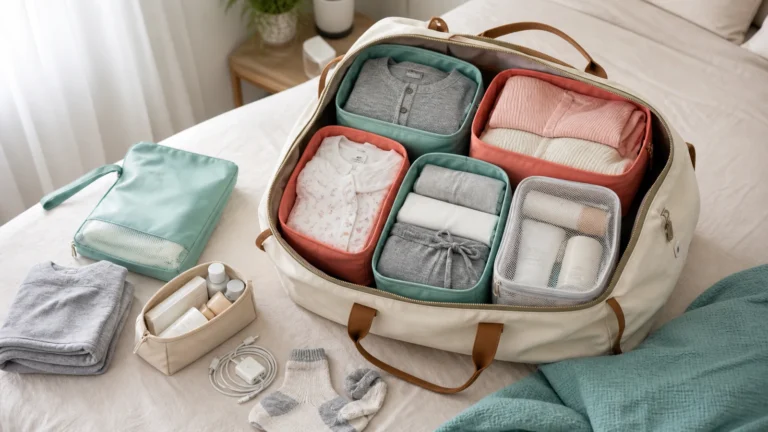
A travel toiletry kit should already hold duplicates if you can manage it, but the final grab may still include glasses, contacts, toothbrush, hairbrush, deodorant, lip balm, and skin basics. I would keep a sticky note on the kit so nobody forgets the daily items.
This travel toiletry kit holds shampoo, conditioner, lotion, and other familiar bathroom basics without packing full-size bottles.
A wet dry bag is helpful if your water breaks at home, clothes get damp, or you need a place for laundry after check-in. It is also a simple way to keep messy items from touching clean baby clothes.
A wet dry bag gives damp clothing, used washcloths, or leak-prone toiletries a separate place for the ride home.
One quiet benefit of a Hospital bag last minute checklist is that it gives damp clothes, daily toiletries, and paperwork somewhere to go before the room gets busy.
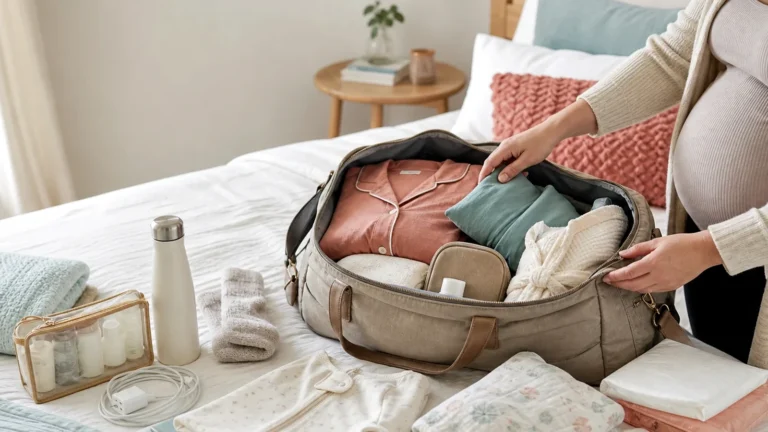
The loose going-home outfit for mom can be packed early, but it is worth a last-minute check. Choose something soft, easy to step into, and forgiving around the belly. A Hospital bag last minute checklist should not send you home in the clothes you labored in unless that is truly your preference.
A loose going-home outfit avoids pressure around a tender postpartum belly while remaining simple to step into before discharge.
Do the Baby and Car Seat Check
The diaper bag backpack can hold the baby discharge outfit, burp cloth, diapers, wipes, and a receiving blanket. Keep it separate from mom’s recovery items so discharge does not start with a frantic bag search.
A hands-free diaper bag backpack with organized pockets for baby basics, chargers, paperwork, and the trip home.
The newborn going-home outfit should be easy to put on and appropriate for the weather, but avoid bulky layers under the car seat harness. If you need warmth, use a blanket over the buckled harness instead of under it.
A soft newborn going-home outfit with a footed one-piece and hat keeps discharge dressing simple while fitting beneath the car-seat harness.
The infant car seat is not really a bag item, but it belongs on the door check. Make sure it is installed or ready according to the manufacturer’s manual and your vehicle manual. Do not wait until active labor to read the car seat instructions for the first time.
An installed rear-facing infant car seat is required for the trip home; confirm the fit and installation before labor begins.
I would put “car seat ready” on the Hospital bag last minute checklist even though the seat stays in the car, because it is too important to leave to memory.
Know When Packing Stops and Calling Starts
ACOG’s guide on how to tell when labor begins explains that timing contractions and knowing when to call are part of recognizing labor. Your packing list should never replace your provider’s instructions about contractions, water breaking, bleeding, decreased fetal movement, high-risk symptoms, or when to come in.
Before you leave, take one calm pass through the parent Hospital Bag Checklist, then stop adding optional extras. A Hospital bag last minute checklist should help you leave with confidence, not restart the packing project.
FAQ
What should be on top of the bag?
Keep documents, phone charger, wallet, glasses, lip balm, hair ties, and the final-grab note on top. These are the items people usually need before the whole bag is unpacked.
Should the car seat go on the hospital bag checklist?
Yes, as a door or car check. It does not go in the bag, but it must be installed or ready according to the car seat and vehicle manuals.
What if labor starts before the bag is finished?
Follow your provider’s instructions first. Grab documents, phone, charger, wallet, glasses, essentials, baby outfit, car seat, and the main packed bag if you can do so safely.
Should I pack daily medications?
Ask your clinician before bringing or taking medications at the hospital. Pack a current medication list if your provider recommends it.
My final Hospital bag last minute checklist advice is to keep the list visible and boring. The less dramatic it feels, the better it works when everyone is moving quickly.
A visible Hospital bag last minute checklist also helps your support person act without asking you to manage every tiny detail.
Once the last-minute items are in the tote, do one final comparison with the full Hospital Bag Checklist, then focus on calling, timing, and getting to the hospital according to your care team’s directions.
Shop Last-Minute Picks