Hospital Bag Documents Checklist: IDs, Insurance, Birth Plan, and Paperwork
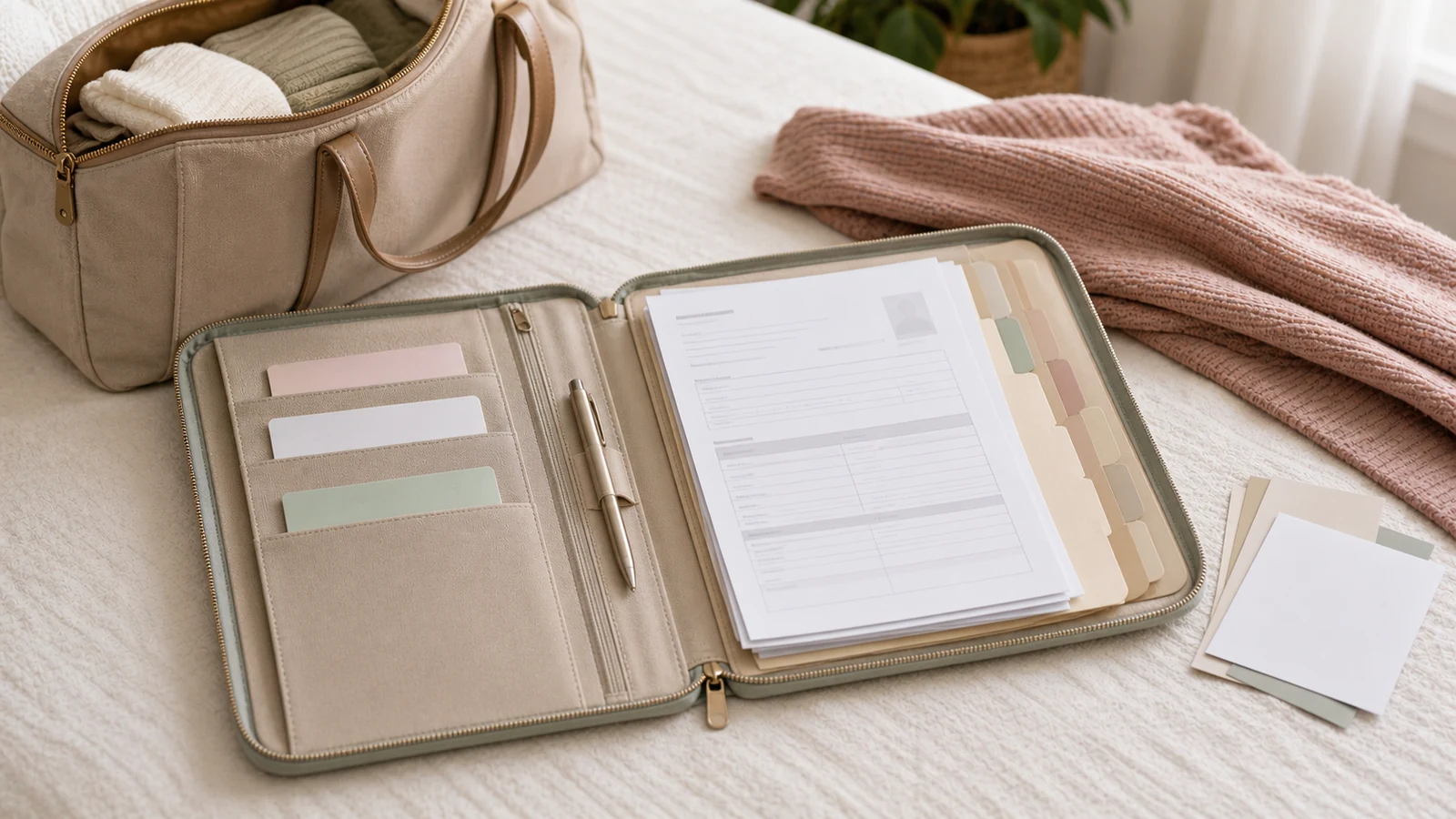
Hospital bag documents should be boring, organized, and immediately reachable. After three births, I would pack a photo ID, insurance card, hospital registration information, medication and allergy list, pediatrician contact details, and a few copies of any birth preferences. Put everything in one labeled folder, then confirm the exact requirements with your hospital because admission forms and identification rules vary.
Keep the folder near the top of your full Hospital Bag Checklist, not under pajamas or baby clothes. Your support person should know where it is and which cards must return to your wallet. The goal is not to bring your entire filing cabinet. It is to make admission and discharge easier when everyone is tired.
Disclosure: BabyEthos is reader-supported. As an Amazon Associate, we earn from qualifying purchases. This does not change what you pay.
QUICK SHOP
Quick Document Organization Picks
A document organizer keeps paperwork divided and visible. A wet dry bag is an optional outer layer that helps separate the folder from toiletries, damp clothing, and possible spills.
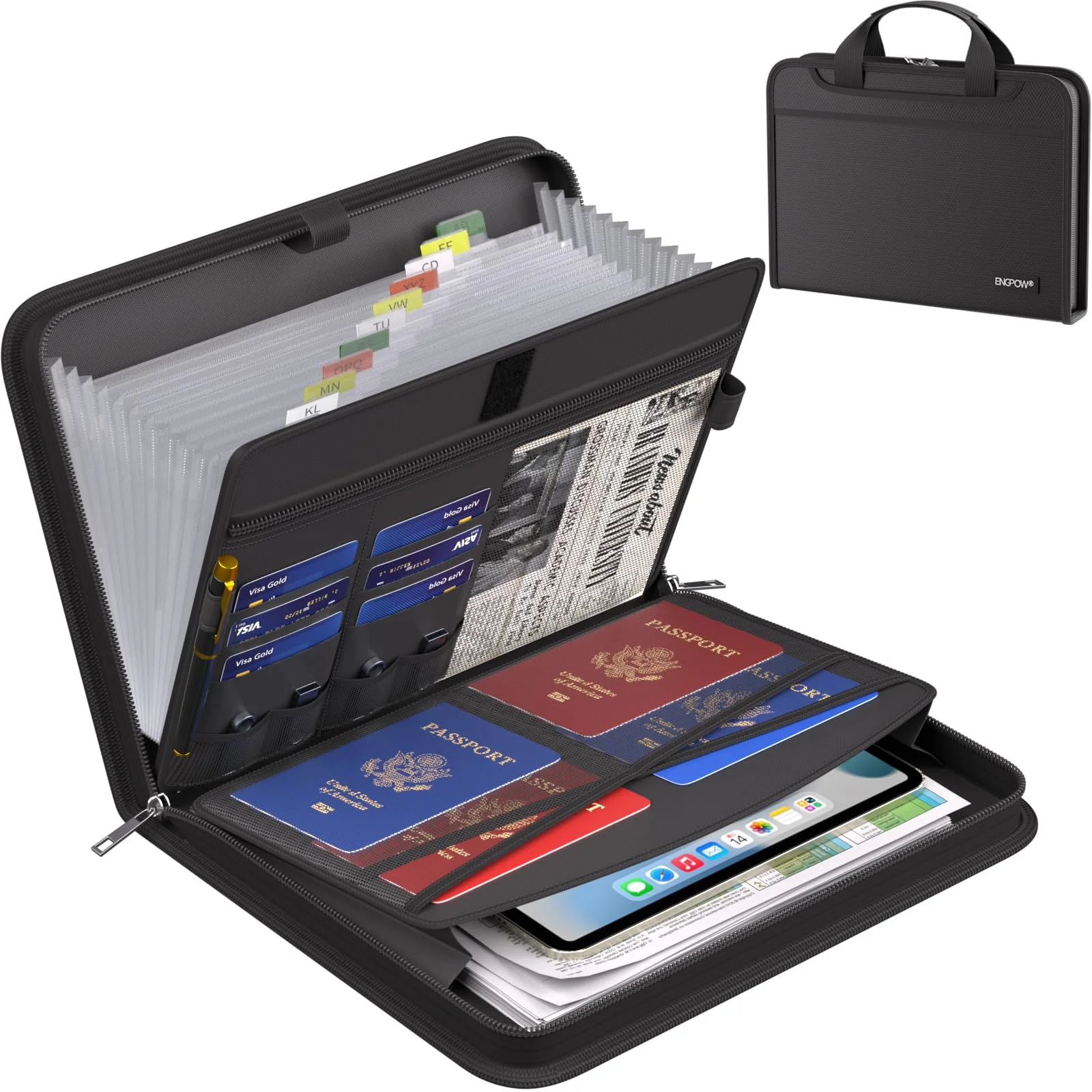
A document organizer folder keeps identification, insurance details, birth preferences, and discharge paperwork together and easy for a partner to find.

A wet dry bag gives damp clothing, used washcloths, or leak-prone toiletries a separate place for the ride home.
Quick Answer: What Paperwork Should You Bring?
For Hospital bag documents, bring the identification and insurance information your hospital requests, plus registration confirmations, a current medication and allergy list, important clinician contacts, pediatrician information if selected, and copies of your birth preferences. Add legal or guardianship documents only when relevant and requested. Keep originals secure and use copies when a copy will do.
Your Hospital bag documents list should come from your hospital’s instructions, not a generic internet checklist alone. Call the registration or labor and delivery department if anything is unclear. Ask what identification is needed, whether preregistration is complete, what insurance information they require, and whether forms can be submitted before arrival.
The Core Document Checklist
| Document | Why it may help | Packing note |
|---|---|---|
| Photo ID | Identity and registration | Use the type your hospital accepts |
| Insurance card | Coverage and billing information | Bring the current card and digital backup |
| Preregistration details | Confirms submitted information | Save the confirmation number or email |
| Medication and allergy list | Supports an accurate health history | Include names, doses, and reactions |
| Clinician contacts | Helps staff reach relevant offices | Include OB, midwife, and specialists |
| Pediatrician information | Useful for newborn follow-up planning | Confirm the practice accepts your baby |
| Birth preferences | Summarizes priorities and questions | Keep it concise and flexible |
Photo identification and the current insurance card are the first Hospital bag documents I would verify. Check expiration dates and make sure the name and plan information are current. If your insurance has separate medical and prescription cards, ask which ones the hospital wants. A photo stored securely on your phone can be a backup, but do not assume it replaces the physical card.
For Hospital bag documents, print or save evidence of preregistration if your hospital offers it. Include the confirmation number, scheduled admission details when applicable, and any instructions the hospital sent. Preregistration can reduce repetitive questions, but you may still need to verify information when you arrive.
Create a one-page medication and allergy list. Include prescription medicines, over-the-counter products, supplements, doses, timing, and known reactions. Update it close to delivery. Bring actual medicines only when your hospital instructs you to, and never take a home medication during admission without telling your care team.
Add important phone numbers even if they are stored digitally. Your OB or midwife office, relevant specialists, chosen pediatric practice, pharmacy, emergency contact, and insurance member services may all be useful. Keep this page with the folder rather than relying on one unlocked phone.
One Organizer That Keeps Papers Findable
A document organizer folder keeps identification, insurance details, birth preferences, and discharge paperwork together and easy for a partner to find.
This document organizer folder is the primary product assigned to this guide. Separate sections make it easier to divide admission items, health information, birth preferences, and papers received during the stay. Choose labels that make sense to your partner because they may be the person finding the insurance card while you answer clinical questions.
I would divide Hospital bag documents into four groups: “Show at Admission,” “Health Information,” “Preferences and Contacts,” and “Take Home.” Leave the last section mostly empty. Hospitals often provide newborn screening information, discharge instructions, follow-up details, receipts, and forms that need a clean place.
Do not write Social Security numbers, account passwords, or unnecessary sensitive information on the folder exterior. Label it with a simple family name or “Hospital Papers.” Keep the organizer with an adult rather than unattended in a public waiting area.
Optional Spill Separation With a Wet Dry Bag
A wet dry bag gives damp clothing, used washcloths, or leak-prone toiletries a separate place for the ride home.
A wet dry bag is a supporting product, not a document filing system. Use a clean compartment or the bag itself as an outer barrier around the closed organizer. This helps keep papers apart from leaking toiletries, damp washcloths, or worn clothing, but it does not make documents fireproof or permanently waterproof.
Keep liquids in a different part of the main bag whenever possible. If the folder becomes damp, remove papers and dry them promptly. Do not put wet clothing into the same compartment as your Hospital bag documents, even when a product is marketed for wet and dry separation.
Birth Preferences and Medical Information
Among your Hospital bag documents, a birth plan is better treated as a concise preferences page. Include priorities that help staff understand communication, comfort, mobility, pain relief, feeding, newborn care, and cultural or accessibility needs. Keep the tone collaborative and acknowledge that medical circumstances may require changes.
Our Hospital bag birth plan guide explains how to make the page useful rather than overly detailed. Bring a few copies if your hospital recommends them, but also discuss important preferences with your clinician before labor. Paper cannot replace conversation or informed consent.
If you have allergies, significant medical conditions, prior complications, or specialist instructions, ask your care team what should be documented and where. Do not rely on a homemade summary as the sole medical record. Your Hospital bag documents can support communication, but clinicians will use their official chart and assessments.
For a scheduled C-section or possible surgical delivery, follow the hospital’s specific arrival and preoperative instructions. Our Hospital bag checklist c section covers comfort-focused packing, but your facility’s instructions determine which paperwork and testing information matter.
What to Save Digitally
Save non-sensitive backups of contact lists, registration emails, directions, parking instructions, and appointment details on both partners’ phones. Download important files so they remain available if hospital Wi-Fi is slow. Use device security and avoid placing highly sensitive information in an unprotected photo album.
A charged phone is helpful, but paper backups still matter. The Hospital bag phone charger guide covers long cables and power banks. Even with good power planning, a phone can be misplaced, locked, updating, or in another room when a number is needed.
When digitizing Hospital bag documents, share only what is necessary and use secure methods recommended by your hospital or insurer. Do not email sensitive health or identity information to an unverified address. Confirm web portals and phone numbers through official paperwork or known contacts.
Paperwork You May Receive Before Discharge
Leave room with your Hospital bag documents for discharge instructions, medication information, follow-up appointments, newborn feeding or screening materials, and billing paperwork. Read the instructions before leaving and ask questions while the care team is available. Identify which symptoms or concerns require a call and which contact number to use.
Birth certificate worksheets and Social Security processes vary by location and facility. Ask the hospital’s birth registrar what forms are provided, what information is required, and how corrections work. Do not assume the hospital automatically completes every application or that online advice applies in your state.
The federal government’s birth certificate guidance explains how certified copies are generally obtained through the vital records office in the state or territory where the birth occurred. Your hospital can explain its worksheet process, but the official certificate and copy procedures follow local rules.
Assign one adult to manage incoming Hospital bag documents. Place every new page in the “Take Home” section instead of on the bed, windowsill, or meal tray. Before discharge, compare the folder with the instructions and confirm you know the follow-up plan.
Privacy and Organization Tips
Bring only sensitive information that is relevant to the stay. Leave passports, Social Security cards, checkbooks, and unrelated records at home unless your hospital specifically requires something. A photocopy may be sufficient for some purposes, but confirm before substituting it for an original.
Do not leave IDs and insurance cards loose on a counter. Return them to a zippered wallet immediately after registration. The folder can hold copies and forms, while the wallet holds cards. This simple division keeps Hospital bag documents organized without exposing everything each time the folder opens.
Review the folder with your support person before labor. Show them the admission section, medication list, clinician contacts, and empty take-home pocket. Include it in the final Hospital Bag Checklist review so the folder does not remain on the kitchen counter.
What I Would Not Pack
I would not pack every prenatal handout, a thick childbirth binder, duplicate medical records already available in the hospital system, or irreplaceable originals that nobody requested. Extra paper creates noise. Bring the pages that help admission, communication, and discharge, then keep the rest accessible at home.
I would also skip decorative organization that hides information. Color coding is useful only when both adults understand it. Your Hospital bag documents system should work in dim light, under stress, and for someone who did not design it.
Before leaving for the hospital, check the current requirements one final time and place the closed folder in the same bag pocket every time. Use the complete Hospital Bag Checklist to confirm that documents, phone, wallet, and keys are physically with you.
FAQ
What documents do I need to bring for labor?
Common items include accepted photo identification, current insurance information, preregistration details, medication and allergy lists, clinician contacts, and birth preferences. Confirm the exact list with your hospital.
Should I bring my Social Security card?
Do not bring it unless your hospital specifically says it is required. Ask which identification is accepted and avoid carrying unnecessary sensitive originals.
How many copies of my birth plan should I pack?
A few concise copies may be useful, depending on your hospital. Discuss key preferences with your clinician beforehand and remain flexible as medical circumstances change.
Can I keep all hospital paperwork on my phone?
Digital backups are useful, but keep essential paper information too. Phones can lose power, connectivity, or access, and some facilities may request physical cards or forms.
My final Hospital bag documents system is one slim organizer with admission items in front, health information next, preferences and contacts behind that, and an empty section for take-home papers. Confirm your hospital’s requirements, protect sensitive information, and make sure your support person can find everything.
Use the Hospital Bag Checklist for the final door-side check. The best document folder is not elaborate; it is present, current, and easy to open when admission begins.
Shop document picks